
The house you raised your family in has started to feel different. The yard takes more time than it used to. Rooms sit empty. You’re thinking about what the next chapter looks like. If you’re considering downsizing in Austin, Texas, you’re in good company. This is one of the most common moves Austin homeowners make, and getting it right requires more thought than simply finding a smaller house.
This guide walks through the decisions that matter most: whether to sell your current home first or find your next one first, how to figure out how much space you actually need, what the financial picture looks like (including how to price a home that holds real sentimental value), how to actually get through the decluttering process, and which Austin communities are worth a closer look. Whatever you’re envisioning for the next stage of life, Austin has more options than most people realize.
Is Now a Good Time to Downsize in Austin?
If you've owned your Austin home for ten years or more, you're likely sitting on significant equity. Values across the Austin metro rose substantially through the 2010s and reached a peak in 2021 and 2022. The market has since stabilized and inventory has increased, which works in your favor as a buyer: there's more to choose from and less competition than there was a few years ago.
The honest answer to "is now the right time?" is that the best time to downsize is when it makes sense for your life, not when the market is perfect. People who wait for ideal conditions often find themselves doing the same mental calculus two or three years later, still in a home that no longer fits, having paid years of property taxes and maintenance costs in the meantime.
Downsizing decisions come from all kinds of life changes, some planned well in advance, others not. If a divorce is part of what's driving this move, our guide to divorce and your Austin home walks through the additional financial and legal considerations that come with selling during that process.
Before You Choose a Neighborhood, Answer These Questions
The most useful thing you can do before you start looking at listings is spend some time thinking carefully about what you actually want from your next home. Most people start with square footage or a neighborhood name, but the more fundamental questions are about how you want to live. Here are the ones worth sitting with.
How much space do you really need? People often underestimate this because they think only about how they live today. Think ahead. How often does family visit? Do you want a dedicated guest room, or can a flex space with a murphy bed serve that purpose? Is there any chance someone could move in with you in the next several years? A second move is expensive and disruptive, so building in a realistic cushion is worth thinking about before you commit.
How much maintenance do you want to take on? A smaller home is not automatically a lower-maintenance home. An older historic house with character can require ongoing care. Acreage lots need to be maintained by someone. A waterfront property with a private dock comes with its own set of responsibilities: permits, repairs, insurance. Think honestly about what you want to spend your time on at this stage of life, and let that guide the type of home you look at.
What does your ideal daily life look like? Do you want to walk to dinner, coffee, or a farmers market? Or would you rather be outside of town in a quieter, more private setting with space around you? Do you want the energy of a walkable neighborhood or the calm of a gated community? There's no wrong answer, but being clear about this upfront will save you from buying the wrong house.
Do you want to live in an age-restricted community? Some people thrive in 55+ communities, where the social calendar is full, the amenities are purpose-built, and neighbors are in similar stages of life. Others strongly prefer an unrestricted neighborhood with a mix of residents. Both are completely valid, and knowing your answer to this question will significantly focus your search in a helpful direction.

Should You Sell First or Buy First?
This is one of the first questions most people ask when they start thinking seriously about downsizing, and the answer depends on your financial situation. That said, our recommendation for most downsizers is to buy first, if you can afford to do so.
Downsizing is a meaningful life transition. The home you move into next should be genuinely right for you, and finding that home takes time. When you buy first, you can search without a clock running on your current home's contract. You're making one of the most important home decisions of your life, and you shouldn't have to rush it.
Buying first also makes for a much cleaner selling experience. Once you've moved into your next home, you can take the time to declutter properly, make any repairs or improvements that will help your sale price, and stage the home so it shows well. It's far easier to present a home in its best light when you're no longer living in it, and buyers respond to that. Showings aren't a disruption to your daily life, and the home tells a cleaner story.
The main consideration is whether you can carry two mortgages, even temporarily. If that's not feasible, talk with your lender about bridge loan options, or discuss whether a negotiated leaseback from your buyer gives you time to find the right next home without feeling rushed. A conversation with your lender and your agent early in the process helps you understand what your options are before you start.
| Buy First | Sell First |
|---|---|
| Time to find the right home without pressure | No bridge loan or dual mortgage needed |
| Sell with home vacant, staged, and showing well | Know your exact budget before you shop |
| No showings disrupting daily life while you live there | Lower short-term financial risk |
| Strong position as a non-contingent buyer | May require moving twice or negotiating a leaseback |
| Requires ability to carry two mortgages temporarily | More pressure to accept the first acceptable contract |
The Financial Picture
The financial side of downsizing in Austin can be very favorable, particularly for long-time homeowners. If you've owned your home for a decade or more, you've likely accumulated significant equity. When you sell, federal tax law allows a married couple to exclude up to $500,000 in capital gains from the sale of a primary residence (single filers can exclude up to $250,000). Texas has no state income tax. That combination means a substantial portion of your profit may come to you without a large tax bill attached.
Married couples can exclude up to $500,000 in capital gains from a home sale. Single filers exclude up to $250,000. Texas has no state income tax — meaning a large portion of your equity may come to you completely tax-free.
What you do with those proceeds shapes your options considerably. Some downsizers choose to buy their next home outright, eliminating a mortgage payment entirely. Others apply a large portion toward the next purchase and invest the rest. A conversation with a financial advisor before you start shopping helps you understand your actual budget and the longer-term implications of each approach.
One cost that catches people off guard is the HOA fee in condo and low-maintenance communities. Fees can range from $200 to over $1,000 per month depending on the property and what's covered. Those fees replace expenses you're currently managing yourself, like landscaping, exterior maintenance, and sometimes building insurance, so the comparison isn't always as unfavorable as the number first looks. Run the full monthly cost side by side with your current expenses, not just the purchase price.

Pricing a Home That Holds Decades of Memories
If you've lived in your home for fifteen, twenty, or thirty years, the number in your head is probably not just a number. It's tied to the kitchen you renovated yourself, the yard where you watched kids or grandkids grow up, and every ordinary Tuesday that added up to a life there. That attachment is real, and it's not something to apologize for. It's also not something the market takes into account.
The mismatch shows up in a predictable way. A home priced from sentiment instead of comparable sales sits longer, draws fewer showings, and often sells for less after a price reduction than it would have if it had been priced accurately from day one. The goal isn't to talk you out of how you feel about your home. It's to keep that feeling from working against you financially.
If you want to sit with that emotional side a little longer before getting into pricing strategy, our guide to right-sizing in Austin walks through exactly that tension.
Separate what you paid for from what buyers will pay for. A home theater built for family movie nights, a custom garden installed over a decade of weekends, or a kitchen finished exactly to your taste all have real value to you. Buyers price a home on recent, comparable sales in your neighborhood, not on what a feature meant to the person who added it. Ask your agent to walk you through the actual closed comps, not the list prices of homes still sitting on the market, and use that data as your starting point.
Make the showings about the house, not the history. Packing away personal photos, collections, and memorabilia before your first showing does two things. It helps buyers picture their own life in the space instead of yours, and it gives you some emotional distance while strangers walk through rooms that hold real memories. Many sellers find this step easier once they realize it's temporary. The photos come with you. The house doesn't.
Let feedback be data, not criticism. When the same comment comes back from multiple showings, whether it's about paint colors, dated fixtures, or price, that's market information, not a judgment of your taste or your years in the home. A good agent filters that feedback for you and tells you plainly when it points to something worth adjusting. A low offer is a negotiating position, not a verdict on the home you raised a family in.
You're allowed to feel two things at once: real grief about leaving a home that mattered, and a clear-eyed, accurate price that reflects what the home is actually worth today. Those aren't in conflict.
The equity you built over those years is what funds whatever comes next, and pricing the home correctly the first time is what protects it.
How Much Smaller Should You Go?
There's no universal answer, but most people find that moving from roughly 2,800 to 3,500 square feet to somewhere in the 1,600 to 2,200 square foot range hits a good balance. That's meaningfully less to maintain while still giving you enough room to live comfortably, host guests, and keep the spaces you actually use.
The right number depends on your situation. Go through your current home room by room and think honestly about what you use regularly versus what just exists. A formal dining room that hosts dinner twice a year may not need to follow you. A home office you use daily does. A hobby room, a dedicated guest suite, space for grandchildren to visit on weekends: these are all real considerations that affect what size home will actually work for your life.
Accessibility is also worth thinking through now, even if it doesn't feel pressing. Single-story homes, elevator access in multi-story buildings, step-in showers, and wider doorways are features that improve long-term livability and tend to hold value at resale. If you're making a move you want to last 15 or 20 years, these details are worth prioritizing.
What is your Austin home worth? Knowing your equity is the first step in any downsizing plan — and it takes less than 60 seconds to find out.
What Type of Home Works Best?
Austin offers several housing types that suit different priorities. Here's a quick comparison of the trade-offs before you focus your search.
| Home Type | Privacy | Exterior Maintenance | HOA | Key Consideration |
|---|---|---|---|---|
| Single-family (single-story) | High | Your responsibility (unless HOA community) | Sometimes | Most flexibility for renovations, pets, and rentals |
| Condo | Lower | HOA covers all exterior | Yes | Monthly fees vary widely — check exactly what's included |
| Townhome | Medium | HOA typically covers exterior | Yes | Often multi-story — confirm layout if stairs are a concern |
| 55+ Community | Varies | Varies by community | Yes | Activity level, amenities, and fees vary enormously — visit before deciding |

Austin Neighborhoods and Communities Worth a Closer Look
Austin and the surrounding metro have more options for downsizers than most people realize. The table below gives a quick overview of every community covered in this guide. Detailed descriptions of each follow below.
| Community | Area | Category | Key Feature |
|---|---|---|---|
| Hills of Lakeway | Lakeway | Guard-Gated Country Club | 24/7 security, private club with golf and dining |
| Cimarron Hills | Georgetown | Guard-Gated Country Club | Jack Nicklaus Signature golf course, gated entry |
| Rough Hollow | Lakeway | Lake Lifestyle | Yacht club and marina access, no private dock needed |
| Zilker | South Austin | Walkable and Urban | Steps from Barton Springs and South Congress |
| Hyde Park | Central Austin | Walkable and Urban | Historic neighborhood with walkable shops and dining |
| Mueller | East Austin | Walkable and Urban | Farmers market, parks, some homes with elevators |
| Downtown Georgetown | Georgetown | Walkable and Urban | Historic square, lower cost of living than central Austin |
| Downtown Round Rock | Round Rock | Walkable and Urban | Accessible price points, growing downtown area |
| Sun City Georgetown | Georgetown | 55+ Community | Largest active adult community in the area, full amenities |
| Heritage Oaks | Georgetown | 55+ Community | Smaller and quieter alternative to Sun City |
| Regency at Santa Rita Ranch | Liberty Hill | 55+ Community | Newer community within master-planned neighborhood |
| Vizcaya (55+ section) | Round Rock | 55+ Community | Age-restricted section with unrestricted section adjacent |
| Bull Creek Ranch | NW Austin | Low-Maintenance | Condo community close to 360/Mopac |
| Gabardine | SW Austin | Low-Maintenance | Garden homes, HOA handles all exterior maintenance |
| Edgewater | Cedar Park | Low-Maintenance | Gated, lock-and-leave, HOA covers exterior |
| Cottages at Abrantes | Cedar Park | Low-Maintenance | Cottage-style, HOA covers exterior maintenance |
| Parmer Ranch Cottages | Georgetown | Low-Maintenance | North Georgetown corridor, low-maintenance HOA |
| Trails at Leander | Leander | Low-Maintenance | Cottage-style living, MetroRail access nearby |
| Anthem Cottages | Kyle | Low-Maintenance | HOA covers front yard, single-family feel |
| Bunker Ranch Condos | Dripping Springs | Low-Maintenance | Hill Country condo lifestyle, lock-and-leave |
| Vizcaya (unrestricted) | Round Rock | New Construction | Newer homes, no age restriction |
| Santa Rita Ranch | Liberty Hill | New Construction | Range of home sizes in master-planned community |
| Carpenter Hill | Buda | New Construction | $500K-$600K Perry Homes, some greenbelt lots |

Guard-Gated Private Country Club Living
Hills of Lakeway is a 24/7 guard-gated community in the Lake Travis area anchored by a private country club with golf, tennis, fitness facilities, and dining. The location puts you close to the lake and the shopping and restaurants of the greater Lakeway area, all within a secure, well-maintained environment.
Cimarron Hills in Georgetown is a guard-gated golf community built around a Jack Nicklaus Signature-designed course. The grounds are beautiful, the pace is relaxed, and Georgetown's historic square is a short drive away for dining, shopping, and regular community events.
Lake Lifestyle
Rough Hollow in Lakeway is a strong option for those drawn to Lake Travis without the burden of a private dock. The community's yacht club and marina give residents easy access to their boats and the lake without the personal maintenance responsibilities that come with owning a dock. On-site amenities include resort-style pools, a fitness center, hiking trails, and a restaurant.
Walkable and Urban
Zilker in central Austin puts you steps from Barton Springs, Zilker Park, and South Congress Avenue. Homes here tend to be smaller and older with genuine character, and the walkability is some of the best in the city.
Hyde Park is one of Austin's most established central neighborhoods, with tree-lined streets and a walkable stretch of shops and restaurants along The Drag and 29th Street. It has the kind of neighborhood character that takes decades to develop.
Mueller is a thoughtfully redeveloped urban neighborhood near Airport Boulevard that combines parks, a weekly farmers market, walkable retail, and a well-planned mix of housing types. Some multi-story homes in Mueller have elevators, making it a more accessible urban option for those who want the convenience without the stairs.
Downtown Georgetown deserves serious consideration. The historic town square is genuinely walkable, with good restaurants, independent shops, and regular community events. Homes near the square range from affordable options to historic properties with real character, and Georgetown offers a meaningfully lower cost of living than central Austin.
Downtown Round Rock has a younger, more energetic vibe with accessible price points. It's a good option for those drawn to the Round Rock corridor who want some of the walkability and character that comes with proximity to a downtown area.
Age-Restricted 55+ Communities
The Austin metro has some excellent active adult communities, and they vary considerably in size, price point, and culture.
Sun City Georgetown is the largest and most amenity-rich active adult community in the area. With multiple golf courses, dozens of organized clubs and activities, fitness centers, pools, and a full social calendar, it's a destination community with a life of its own. It's a great fit for someone who wants a vibrant, social environment and a wide range of on-site activities.
Heritage Oaks is a smaller-scale alternative. If you're drawn to the active adult community concept but want something quieter and less intense than Sun City, Heritage Oaks is worth a closer look.
Regency at Santa Rita Ranch in Liberty Hill is a newer active adult community within the well-regarded Santa Rita Ranch master-planned neighborhood. It offers modern homes and community amenities in a growing northwest corridor. Santa Rita Ranch also has unrestricted sections with smaller homes if you prefer not to live in an age-restricted environment but still like the area.
Vizcaya in Round Rock has both a 55+ section and an unrestricted section, giving you flexibility depending on what appeals to you. If the Round Rock area is on your radar, it's worth exploring both.
For a deeper look at active adult communities across the Austin metro, see our guide to active adult communities in Austin.
Low-Maintenance Communities
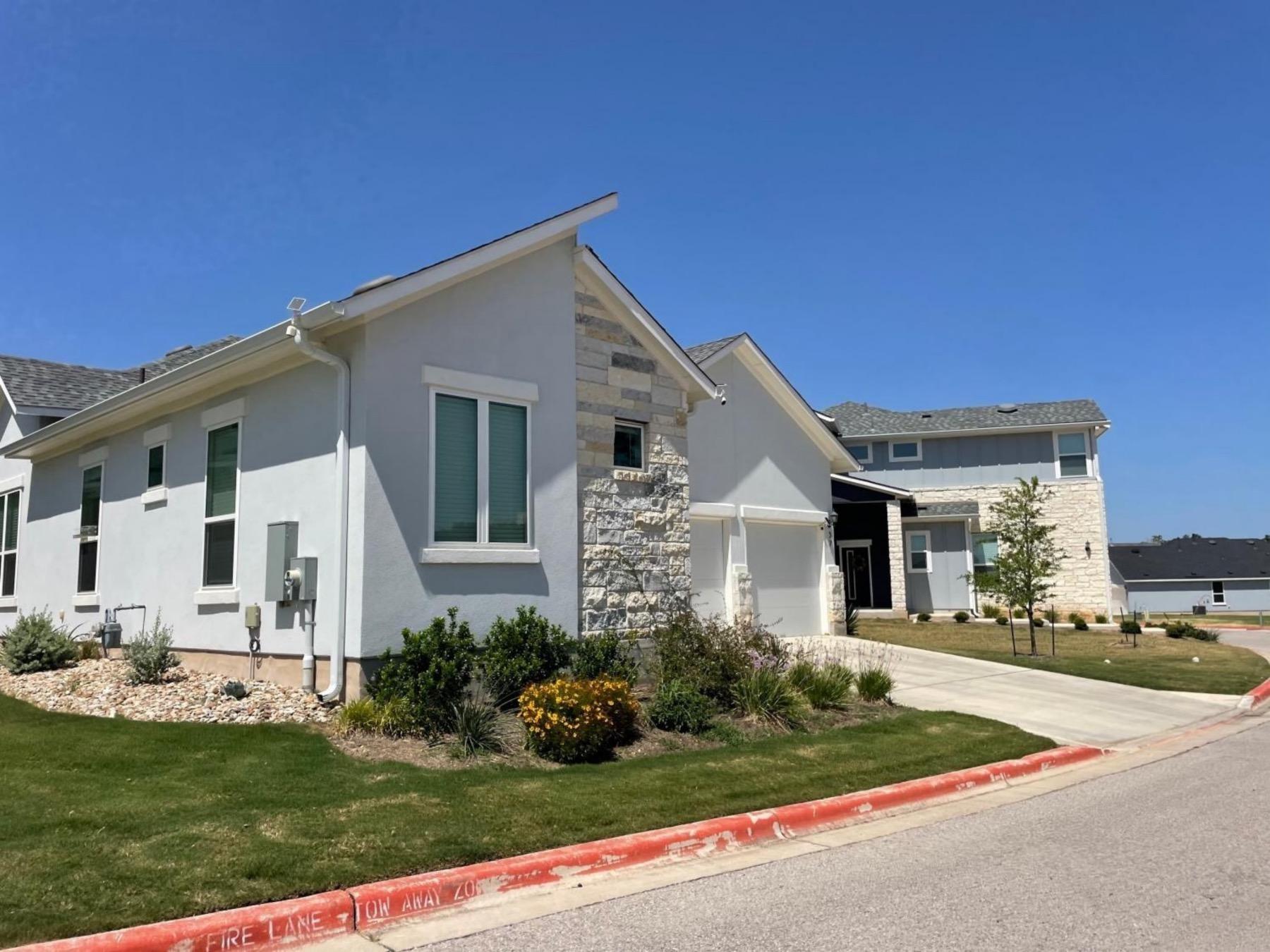
These communities handle exterior and yard maintenance through the HOA, which is a significant quality-of-life change for people coming from a larger home with a full yard to manage.
Bull Creek Ranch in Northwest Austin is a condo community in a convenient location close to 360/Mopac with easy access to central Austin. It fills a real gap in northwest Austin for those who want low-maintenance living without leaving that part of town.
Gabardine in Shady Hollow is a garden home community in a well-established southwest Austin neighborhood, a solid option for those who want to stay in the south Austin area with reduced maintenance responsibilities.
Edgewater in Cedar Park is a gated, lock-and-leave community with HOA-covered exterior maintenance. The gated entry is an added draw for those who travel frequently or spend extended time out of town.
Cottages at Abrantes in Cedar Park offers cottage-style living with HOA-managed exterior maintenance in Cedar Park's established residential corridor.
Parmer Ranch Cottages in Georgetown is a low-maintenance community within the Parmer Ranch neighborhood, with Georgetown's growing north corridor of dining, shopping, and services nearby.
Trails at Leander offers cottage-style living in Leander with low-maintenance landscaping handled by the HOA. Leander has grown considerably in recent years and now has a MetroRail station, making it more connected to Austin than it once was.
Anthem Cottages in Kyle sits within the Anthem master-planned community. The HOA covers front yard maintenance, giving you the feel of a single-family home with meaningfully less to manage.
Bunker Ranch Condos in Dripping Springs brings a Hill Country lifestyle to a condo format. Dripping Springs has developed a distinct personality over the past decade, with strong local dining, craft breweries, and a growing arts scene.
New Construction at More Accessible Price Points
If you want a newer home at a lower price than most of central Austin offers, a few communities are worth considering.
Vizcaya's unrestricted section in Round Rock offers newer construction in an established location. If you want a newer home in that area without age restrictions, it's a natural starting point.
Santa Rita Ranch in Liberty Hill has a range of home sizes. The smaller plans within the community offer a way to get into this well-regarded master-planned neighborhood without buying one of the larger homes.
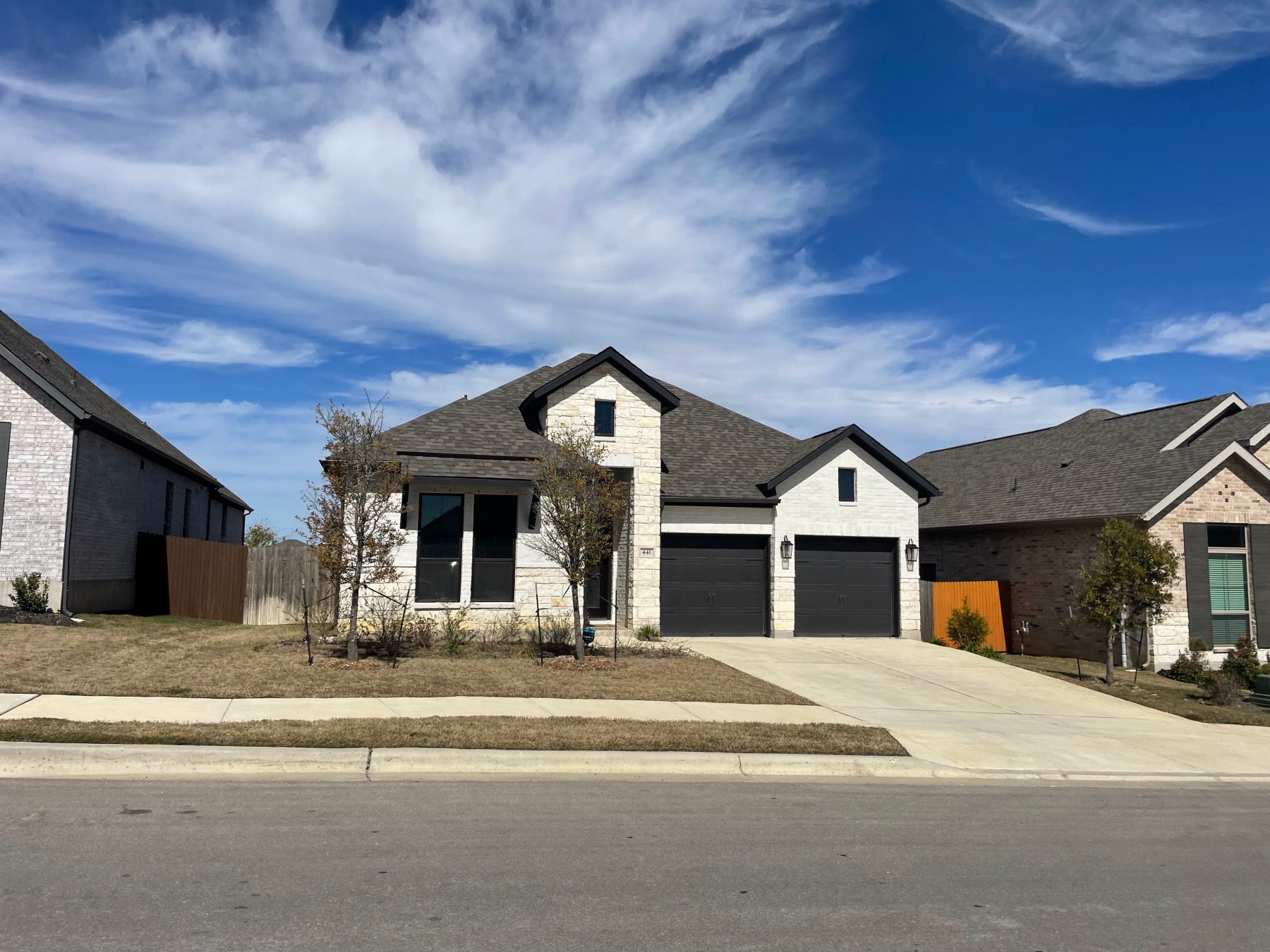
Carpenter Hill in Buda is a Perry Homes community in west Buda with homes generally in the $500,000 to $600,000 range. Lots are on the smaller side, and some back to greenbelt. The nearby Hays YMCA and Buda Sportsplex add recreational options without requiring on-site amenities.
Downsizing to Be Near Family
Before you settle on an area or community type, it's worth asking a simpler question: where does your family live? If being close to your kids or grandkids matters more to you than any particular lifestyle feature, start your search near them rather than in the neighborhoods that sound appealing in theory.
The good news is that low-maintenance options exist in most parts of the Austin metro. You don't have to choose between proximity to family and a home that's easier to manage. Before you focus on a specific area or community type, look for garden home sections, cottage communities, and condo buildings within or near the neighborhood where your family already lives. You might find exactly what you need without having to move across town at all.
How to Actually Declutter Before You Move
Starting early is good advice, but it's not a plan. If you're staring at a house full of decades of belongings with no clear place to start, here's a practical way to work through it without losing months to indecision.
Go room by room and put everything into one of four groups. This keeps each decision small and specific instead of one overwhelming judgment call about the whole house.
Keep what you use regularly or what's genuinely irreplaceable, like legal documents and family photos. Give what's in good condition to a family member who'll treasure it or a local charity that can put it to use. Sell furniture, collectibles, and higher-value items individually or through an estate sale. Let go of everything else you haven't used in a year and wouldn't miss.
A staged timeline keeps the process from turning into one exhausting scramble the week before you list. Ninety-plus days out, clear the easy categories first: garages, storage closets, duplicate items, so the volume feels manageable early. Sixty days out, work room by room through the harder categories, including anything tied to a specific memory or decision. Thirty days out, do a final walkthrough with fresh eyes, the kind that comes from a friend or your agent, since it's hard to see your own space clearly by this point.
The four-category sort works fine for most of a house. Sentimental items need their own approach, because the hard part is rarely logistics. It's the decision itself. Keep a separate box for anything you can't decide about on the spot, and revisit it once, near the end of the process, instead of forcing a decision the first time you touch the item. For things you want to remember but don't need to keep, a photo or a short video preserves the memory without the object. And if a piece genuinely matters to someone else in your family, involve them directly. A conversation about who wants the dining table your family gathered around for thirty years usually goes better than deciding for them.
Austin has real options for every category, so very little has to go straight to a dumpster. Austin Habitat for Humanity ReStore and Goodwill Central Texas both accept furniture and household goods in good condition. Facebook Marketplace and local consignment shops work well for selling smaller valuables individually. And if you're working through a full house on a deadline, Austin has established estate sale companies that specialize in downsizing clear-outs, and the fee can be worth it for the time it saves.
However you divide the work, the goal is the same one the rest of this guide points toward: walking into your next home with what you actually want there, and handing off the rest instead of moving it twice.
Common Downsizing Mistakes to Avoid
Underestimating how long it takes to sort through a full house. Most people think they'll get through it in a few weekends. It usually takes considerably longer. Starting the decluttering process well before your target move date makes everything less stressful and gives you time to be thoughtful about what you keep.
Comparing purchase prices without factoring in HOA fees. A $450,000 condo with $700 per month in HOA fees has a materially different monthly cost than a $500,000 single-family home with no HOA. Run the full monthly cost comparison, not just the listing price.
Choosing the next home based primarily on price. A good deal on a home that doesn't match how you want to live isn't actually a good deal. Lifestyle fit matters as much as the numbers.
Waiting for the perfect market. There is no market condition where downsizing is completely without trade-offs. If the move makes sense for your life, waiting for ideal conditions often results in years of additional maintenance costs and property taxes on a home that no longer fits.
Not thinking ahead about accessibility. Features that aren't a concern today can become important over time. A single-story home, a step-in shower, wider doorways, and elevator access in multi-story buildings are worth prioritizing even when they don't feel urgent, particularly if you're buying a home you plan to stay in for 15 to 20 years.
Frequently Asked Questions About Downsizing in Austin
If you can afford to carry two mortgages temporarily, buying first is generally the better approach. It gives you time to find the right home without pressure, and lets you sell your current home in a better-staged, less personal condition after you've moved out. If carrying two mortgages isn't feasible, talk with your lender about bridge loan options, or negotiate a leaseback with your buyer to give yourself more time.
There's no single best neighborhood — it depends on what you want from your next home. Zilker, Hyde Park, and Mueller suit those who want walkability and urban character. Rough Hollow and Hills of Lakeway appeal to those who want a lake or country club lifestyle. Low-maintenance communities like Gabardine, Edgewater, Bull Creek Ranch, and Trails at Leander are spread across different parts of the metro. Georgetown, with its historic square and lower cost of living, is increasingly popular with Austin downsizers looking for character and value.
Yes, quite a few. Options include Gabardine in Southwest Austin, Edgewater and Cottages at Abrantes in Cedar Park, Bull Creek Ranch in Northwest Austin, Trails at Leander, Anthem Cottages in Kyle, Parmer Ranch Cottages in Georgetown, and Bunker Ranch Condos in Dripping Springs. These communities handle exterior and yard maintenance through the HOA, significantly reducing the upkeep compared to a traditional single-family home.
The Austin metro has several well-regarded active adult communities. Sun City Georgetown is the largest and most amenity-rich. Heritage Oaks in Georgetown is a smaller, quieter alternative. Regency at Santa Rita Ranch in Liberty Hill is a newer option within a master-planned community. Vizcaya in Round Rock has both a 55+ section and an unrestricted section. For a complete list, see our guide to active adult communities in Austin.
Most people find that going from 2,800 to 3,500 square feet to 1,600 to 2,200 square feet hits a comfortable balance. That said, don't size down based purely on square footage. Think through how often guests visit, whether you need a dedicated office, and whether you can foresee anyone needing to move in. A second move is expensive, so it's worth taking the time upfront to figure out how much space you'll genuinely use.
Ready to Talk Through Your Options?
The right starting point is usually a clear picture of what your current home is worth. From there, you can run the numbers, understand your budget for the next home, and figure out whether buying first or selling first makes more sense for your situation. Get a free home evaluation here, or reach out directly via call/text at (512) 827-8323 or email at info@11OaksRealty.com to talk through your specific situation. Eleven Oaks Realty has been helping clients buy and sell homes since 1978, and we're glad to help you think through the right path forward.