
You’ve walked through a beautiful model home in a brand-new community in Georgetown or Leander. The sales rep has been friendly and helpful, the finishes are gorgeous, and the builder is dangling some attractive incentives. Before you sign anything, there are things you need to know — because buying new construction is fundamentally different from buying a resale home, and many buyers don’t discover the differences until it’s too late.
This guide covers how the builder sales process actually works, what those incentives really mean, how 2025-2026 tariffs are affecting prices and timelines, and why having your own agent is worth understanding but could save you tens of thousands of dollars.

New Construction in Austin in 2026: What the Market Looks Like
New construction represents approximately 26% of all Austin-area home inventory in 2026 -- roughly one in every four homes for sale is brand new. That's a significant share, and builders know it. They invest heavily in model homes, marketing, and full-time sales staff ready to walk you through the buying process every day.
The most active new construction markets in the Austin metro area right now are Georgetown, Leander, Liberty Hill, Kyle, Buda, and Pflugerville. Each of these suburbs has seen significant growth in new home communities over the past several years, driven by buyers looking for more space, newer construction, and price points that are often lower than central Austin offers.
Price ranges for new builds in these markets start around $300,000 and extend well into the $600,000s and beyond, depending on the builder, community, lot size, and finish level. Entry-level communities in Kyle and Buda often start in the high $200,000s, while Georgetown and Leander span a wider range from the $300,000s to the $600,000s. Liberty Hill trends higher, with many communities priced between $400,000 and $700,000.
New Construction vs. Resale: An Honest Comparison
Choosing between a new build and a resale home is a real decision, and both have genuine advantages and drawbacks. Here's an honest look at each.
New construction advantages:
- Builder warranty: Most new builds include a 1-year workmanship warranty, 2-year systems warranty, and 10-year structural warranty
- Energy efficiency: New homes meet current building codes with better insulation, more efficient HVAC systems, and typically lower utility bills than older homes
- Customization: In build-to-order situations, you can often select flooring, cabinets, countertops, and other finishes
- Modern layouts: Floor plans designed for how people live today, including open-concept spaces and dedicated home office areas
- Lower near-term maintenance: No deferred maintenance to inherit
New construction drawbacks:
- HOA fees are almost universal in new communities -- and they can increase over time as amenity maintenance costs rise
- No established character yet: New communities have no mature trees, minimal landscaping, and no neighborhood history
- Model-home vs. spec-home finishes: The model is always upgraded to showcase the builder's best work; production homes at base prices look different
- Builder-friendly contracts: Written to protect the builder, not you
- Timeline risk: Builds can and do get delayed
Resale home advantages:
- Established neighborhoods with mature trees, character, and walkability
- More location variety, including closer-in suburbs and central Austin
- Many areas have no HOA
- What you see is what you get -- no waiting on a build
- More negotiating flexibility in the current market
Resale home drawbacks:
- Potential deferred maintenance or outdated systems
- Generally less energy-efficient than new construction
- No customization without renovating
- Inspections are critical and findings can complicate transactions
Neither option is universally better. The right choice depends on your timeline, budget, priorities, and the specific homes available when you're ready to buy. What is true for both is this: having your own buyer representation matters.
How the Builder Sales Process Actually Works
Walk into any new construction sales office in Austin and you'll be greeted by a friendly, polished sales representative. They know the floor plans, the community, the builder's process, and every incentive available. They're good at their jobs.
Here's the thing: they work for the builder.
The builder's sales representative is the builder's employee. Their job is to sell the builder's homes at the best terms for the builder. That's not a criticism -- it's simply the structure of the relationship. They are not your advocate, and they're not legally obligated to represent your interests.
The contract you'll be asked to sign is also the builder's contract. It was drafted by the builder's attorneys to protect the builder. It typically includes provisions that limit your remedies if something goes wrong, restrict your ability to cancel without losing your deposit, give the builder flexibility on timelines and finish specifications, and require or strongly incentivize you to use the builder's preferred lender and title company.
Most builders operate honestly and want buyers to be satisfied -- a dissatisfied buyer is bad for referrals and reputation. But the process is structured to benefit the builder. Having your own agent brings someone into that process who is legally obligated to represent you.
Why You Need Your Own Agent for New Construction
Here's what a lot of buyers don't realize: builders will often pay a buyer's agent commission because they want agents bringing buyers to their communities. But that's negotiated case by case now, not guaranteed. Your buyer representation agreement spells out exactly how your agent is compensated before you tour a model home.
So what does having your own agent actually get you?
Negotiation on your behalf. Builders often present their prices as fixed, but there is almost always room to negotiate something -- whether that's a lot premium reduction, an upgrade package, a rate buydown extension, closing cost credits, or a combination. Buyers who go in without an agent often leave money on the table simply because they don't know what's negotiable and don't have someone advocating for them.
In transactions we've been involved in, buyers have negotiated $15,000 to $20,000 in combined upgrades, closing cost credits, and rate buydown contributions that the builder's sales rep hadn't offered upfront. That money was available -- it just took asking.
Contract review before you sign. Builder contracts are long and detailed, and they're written to favor the builder. An experienced agent walks you through the key provisions, flags anything unusual, and helps you understand exactly what you're agreeing to.
Independent inspection coordination. New build or not, you should have an independent inspector -- more on that below.
Market knowledge on the builder. An agent who works regularly in these markets knows which builders deliver on time and to the quality they promise, and which ones have had issues.
One important step: Register your agent before your first visit to the sales office. Most builders require your agent to be registered on or before your first visit in order to recognize and pay the buyer agent commission. If you visit without registering your agent first, you may lose the ability to have representation. Bring your agent from the start -- your representation agreement will spell out the terms upfront, and having someone on your side protects your interests.
Builder Incentives in 2026: What's Real and What's a Sales Tactic
Austin builders are currently offering meaningful incentive packages. The typical package in mid-2026 ranges from $10,000 to $30,000 in total value, made up of some combination of interest rate buydowns, closing cost credits, and design center allowances.
Interest rate buydowns are among the most valuable incentives available right now. Builders often work with preferred lenders to offer below-market rates -- in many communities, buydowns into the 4.99% range (and in some cases lower) are available, compared to prevailing market rates in the 6-7% range. On a $450,000 home, that rate difference can mean $300 to $600 less per month. Over the early years of your loan, that's significant.
A few things to understand before you take incentives at face value:
Incentives are almost always tied to the builder's preferred lender. You can often choose your own lender, but you'll typically forfeit the incentive if you do. Get the math in writing before deciding -- sometimes the incentive is worth it, sometimes your own lender's rate is competitive enough that you're better off without the constraint.
Design center allowances can look bigger than they are. A $15,000 design center credit sounds generous until you price out what you actually want. Upgrading from base flooring to the option you like might cost $8,000. The countertops you want are another $10,000. Know your actual costs before evaluating whether the credit is sufficient.
Incentives may be negotiated further with representation. Builders have flexibility they don't always advertise. An agent who works regularly in a given community often knows what's genuinely available versus what's just the opening offer.
Closed-sales data confirms this varies widely by neighborhood — see our breakdown of Why the List Price in Austin's Newest Neighborhoods Is Not the Real Price for which Austin-area new-construction communities have seen the biggest gaps between original list price and final sale price.
The incentive landscape may tighten. Because of tariff pressure on building materials, the pools builders can afford to offer may shrink in the second half of 2026. If you're actively shopping, that's worth factoring in.
The Tariff Impact on Austin New Homes
The 2025-2026 tariff landscape has added real cost pressure to new home construction, and buyers should understand what this means when evaluating pricing and timelines.
The core issue is that significant portions of the materials used to build homes in the U.S. are imported or use imported components. Canadian softwood lumber now faces a combined duty rate of around 45%. Steel tariffs are running at 50%. Aluminum has risen roughly 30% year-over-year. Kitchen cabinets, vanities, and other finish materials have also been affected.
NAHB estimates that tariffs are adding approximately $10,900 to $17,500 to the cost of each new home built.
In Austin specifically, the dynamic is nuanced. Because builders in this market are already holding significant inventory of unsold homes and lots, they're not in a strong position to simply pass tariff costs through with higher list prices. Instead, that pressure tends to show up as margin compression -- which is one reason incentive packages may become less generous as 2026 progresses, and why some smaller regional builders are pausing new starts.
For buyers, the practical takeaway is this: pricing on new homes isn't likely to spike dramatically given competitive inventory levels, but incentive packages that are generous right now may not stay that way. Build timelines can also be extended when tariff-related trade disruptions delay material delivery. Ask your builder about current lead times and how potential delays are addressed in the contract.
Understanding the New Construction Timeline
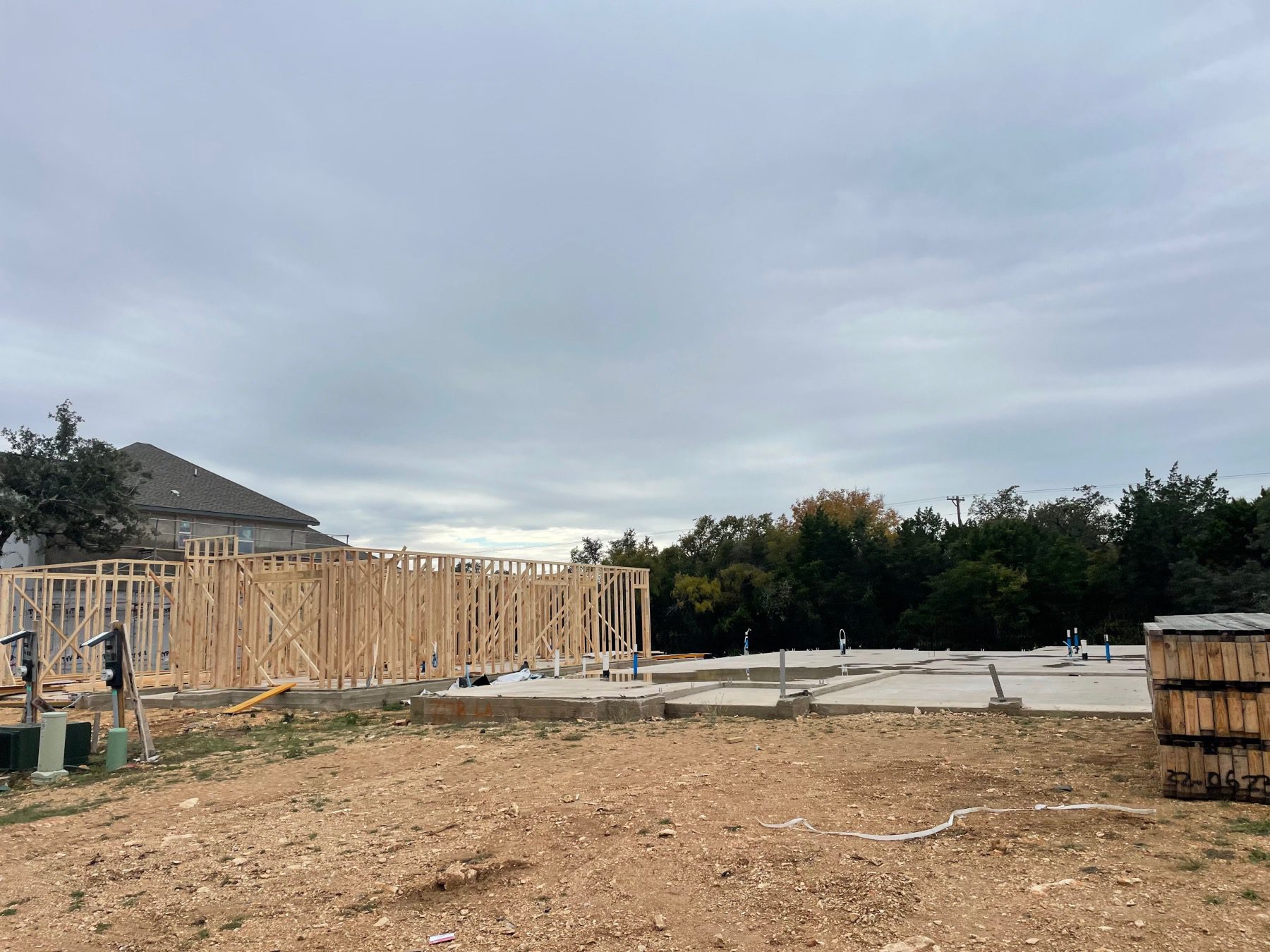
From contract signing to closing, a typical new construction home in the Austin area takes 4 to 8 months to build, depending on home size, builder workload, and community. Here's a general picture of what happens at each stage:
Contract and pre-construction (weeks 1-4): You sign the purchase agreement, make your design center selections, and finalize your financing. This is when you're choosing your finishes, flooring, cabinets, and upgrades.
Foundation and framing (months 1-3): Groundwork, foundation pour, framing, and rough-in of electrical and plumbing. The home starts to take physical shape.
Systems and enclosure (months 3-5): HVAC installation, insulation, drywall, and exterior finishes. This is when a pre-drywall inspection is valuable -- you can see what's behind the walls before they're closed up.
Interior finishes (months 4-7): Flooring, cabinetry, countertops, paint, and fixtures. Your design selections become visible.
Final inspections and closing (months 7-8): Builder walk-through, punch list, your independent inspection, and closing day.
Common causes of delays include material supply issues (increasingly relevant with current tariff disruptions), weather, labor availability, and permitting timelines. Understand whether your contract's completion date is firm or estimated, and what your options are if it isn't met.
Red Flags to Watch For in New Construction
Not all builders and communities are equal. These are things that warrant extra attention:
A builder's track record on delivery. Before you commit, research the builder's history on actual versus estimated delivery timelines. An agent who works regularly in these markets can tell you which builders are consistently reliable and which have had problems.
HOA fees and where they're headed. Many new communities launch with low HOA fees that increase over time as the community ages and amenity maintenance costs rise. Review the HOA documents carefully and ask about the projected fee schedule -- not just what it is today.
Spec-home finishes versus model-home finishes. Walk through a recently completed production home in the same community if you can, not just the model. That's a much more accurate representation of what you're buying at base price.
Skipping the independent inspection. Some buyers assume a brand-new home doesn't need an inspector. It does. Construction defects, improper installations, and missed code items do occur in new builds. Always hire your own independent inspector. And if the timeline allows, schedule a pre-drywall inspection so the inspector can see what's behind the walls before they're closed.
Pressure around the builder's preferred lender. Builders often incentivize buyers to use their in-house lending affiliate, which is common and not necessarily problematic. Just confirm you're getting a genuinely competitive rate, and make sure title and closing costs are reasonable too.
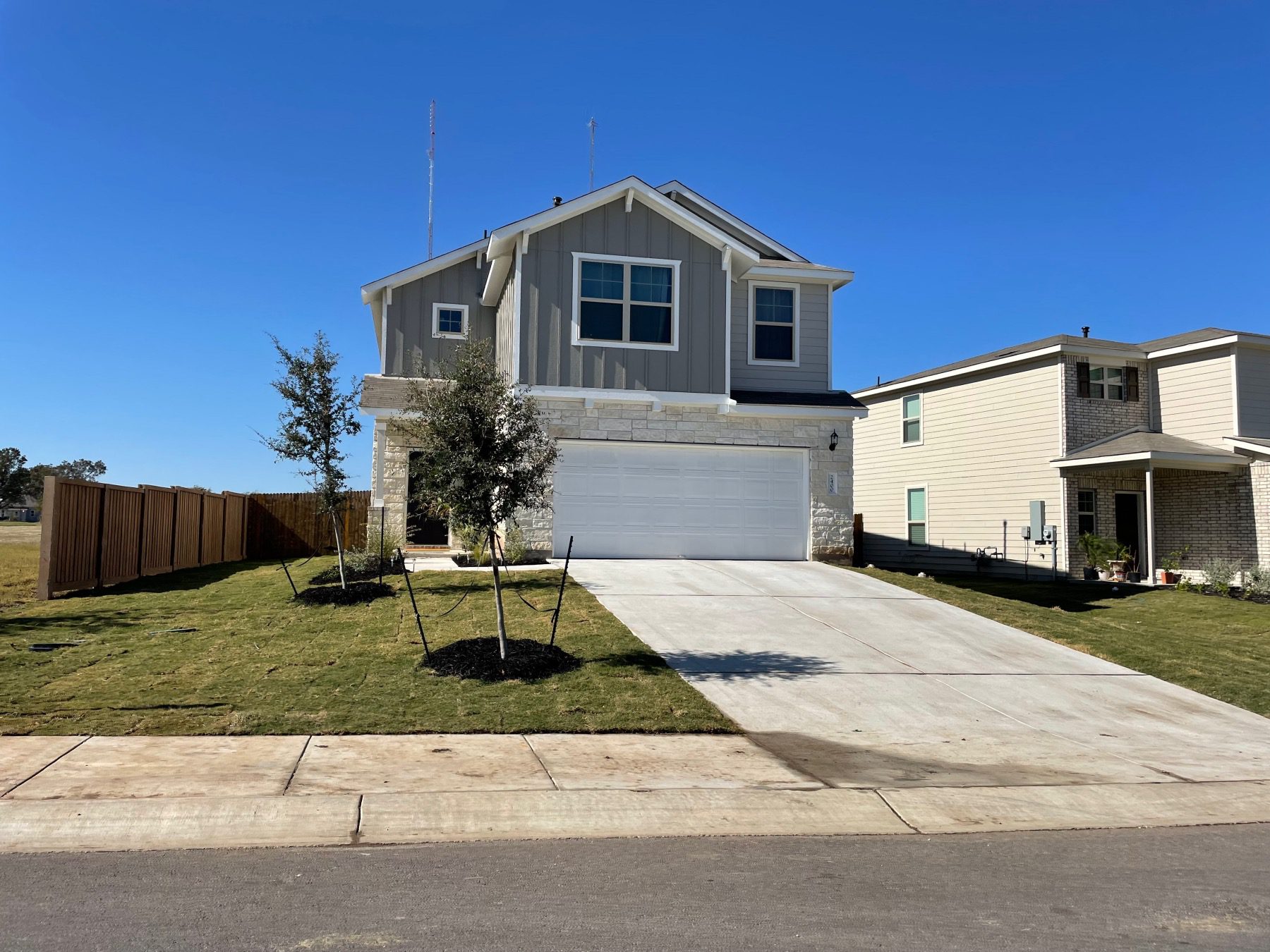
Top New Construction Areas Near Austin
Georgetown is one of the most active new construction markets in the metro area, with communities spanning the low $300,000s to the $500,000s and above. The city has a charming historic downtown square and sits roughly 30 to 35 miles north of downtown Austin. Commute times into the city range from 45 minutes to over an hour depending on traffic.
Leander has grown significantly over the past decade and has one major advantage most Austin suburbs don't: Metro Rail access into downtown Austin. New construction ranges from the $300,000s to the $700,000s and above, and the community is about 30 miles from downtown.
Liberty Hill appeals to buyers looking for larger lots and a quieter setting a bit further from the city. New communities here tend to run $400,000 and above, with commutes to Austin typically in the 45-60 minute range. For buyers working in the northwest Austin tech corridor, the commute is more manageable.
Kyle and Buda offer some of the most affordable new construction in the metro area, with some communities starting in the high $200,000s. They sit south of Austin along I-35, with commutes to downtown ranging from 30 to 45 minutes outside peak hours -- though I-35 congestion can push that significantly during rush hour.
Pflugerville is a well-established suburb northeast of Austin with solid access to employers in the Domain area and the north Austin tech corridor. New construction is available in the $300,000s to $500,000s, and commutes to central Austin run 25 to 40 minutes depending on where you're headed.
Major Austin Area Builders: A Quick Comparison
Here's an overview of the major production builders active in the Austin metro area in 2026:
| Builder | Typical Price Range | Quality Tier | Primary Austin-Area Markets |
|---|---|---|---|
| D.R. Horton | $290,000 - $480,000 | Entry to mid-level; highest-volume builder in the U.S. | Georgetown, Kyle, Buda, Pflugerville, Leander |
| Pulte Homes | $300,000 - $600,000+ | Mid-level; also builds under Centex brand at entry level | Georgetown, Leander, Cedar Park, Kyle |
| Meritage Homes | $310,000 - $600,000 | Mid-level; known for energy efficiency and spray foam insulation standard | Georgetown, Leander, Liberty Hill, Kyle, Buda |
| Taylor Morrison | $400,000 - $800,000+ | Mid to upper-mid; broader lot sizes and more custom feel in many communities | Georgetown, Leander, Cedar Park |
| David Weekley Homes | $500,000 - $900,000+ | Upper-mid; strong reputation for design and customer service | Leander, Georgetown, Cedar Park, Lake Travis area |
| Perry Homes | $350,000 - $700,000 | Mid-level; Texas-based builder with long track record | Georgetown, Liberty Hill, Kyle, Cedar Park |
Ready to Look at New Construction? Start Here.
Buying a new construction home in Austin can be a genuinely good decision -- especially if you go in with clear eyes about how the process works and what to watch for. The builder's team is helpful, the homes are well-designed, and the incentives are real. But the process is built by and for the builder, and you deserve someone in your corner.
Eleven Oaks Realty represents buyers in new construction transactions at no additional cost to you. We'll review the builder's contract before you sign, help you evaluate what the incentives are actually worth, negotiate on your behalf, and make sure you have independent inspection coverage through the process. If you're considering a new build anywhere in the Austin metro area, reach out before you register at the sales office -- we need to be registered from your first visit for our representation to be recognized.




Leave a Reply