
Selling your home is emotional. That’s completely normal. You’ve lived in it, invested in it, and built a life there. But in Austin’s 2026 market, where buyers have leverage, average days on market have stretched to 89 days, and nearly half of all listings are taking price cuts before they sell, emotional decisions don’t just slow your sale. They cost you real money.
The sellers who lose the most in this market aren’t the ones with the wrong house. They’re the ones letting emotion run the show. Here are six specific ways that plays out, and what to do about each one.

What the Austin Market Looks Like Right Now
- 89 days: average days on market across the Austin metro (April 2026, Unlock MLS)
- 11,500+: active listings competing for buyers at any given moment
- 4.77 months: current inventory level are firmly in buyer’s market territory
- ~48%: share of Austin listings currently taking price cuts before they sell
- $5,000–$15,000: typical seller concession range on 2026 Austin transactions
This is the market your home is entering. Buyers have options, time, and leverage. Every emotional decision you make as a seller hands them more of all three.
Key Takeaways
- In Austin’s 2026 market, the average home sits for 89 days before selling. Buyers have time and options. Your emotional decisions hand them leverage.
- Anchoring your price to what a neighbor sold for in 2021 or 2022 is one of the fastest ways to guarantee a price reduction later.
- Counter every offer you receive. Every single one. There is no downside to countering.
- In this market, seller concessions are standard, not exceptional. Refusing them on principle costs more than offering them.
- Before you list, go tour the competition. See exactly what buyers are comparing your home to.
In This Post
You Hired Someone Based on Loyalty, Not Qualifications
You Think It’s Still 2021
You’re Pricing with Your Heart, Not the Comps
You Won’t Respond to “Lowball” Offers
You’re Refusing to Offer Concessions
You Can’t Be Objective About Your Home’s Value Relative to the Competition
You Hired Someone Based on Loyalty, Not Qualifications
This one is hard to say out loud, but it costs sellers thousands of dollars every year. Your brother-in-law just got his license. Your best friend has been in real estate for a few years but mostly handles rentals. Your neighbor would love to help. Saying no to someone you care about is uncomfortable. So you say yes. And then you pay for it.
Selling your home is likely the largest financial transaction of your life. The person you choose to represent you matters more than almost any other decision in this process. Loyalty is not a qualification.
Here’s what actually matters when choosing a listing agent in Austin right now:
- List-to-sale ratio: What percentage of list price do this agent’s sellers typically receive? An agent closing at 97% of list price versus one closing at 92% is a $30,000 difference on a $600,000 home.
- Days on market vs. the Austin average: How quickly does this agent move homes compared to the area average of 89 days? Dramatically slower suggests pricing or marketing problems.
- Active experience in your price range: Selling a $550,000 home in Cedar Park requires different market knowledge than selling a $1.2M home in Westlake. Make sure your agent knows your specific segment.
- Marketing approach: Professional photography, video, and paid promotion are the minimum. Ask to see examples of their current active listings before signing.
Interview at least two or three agents before deciding. Ask each one to walk you through the comps they used to arrive at their suggested list price. The agent who shows you the data and stands behind it is the one worth hiring.
Related: Selling Your Austin Home
You Think It’s Still 2021
The 2021 and 2022 Austin market was genuinely unlike anything the city had seen before. Homes sold in under 30 days. Buyers made double-digit offers the first weekend. Inspections and appraisals were routinely waived just to stay competitive. For two years, that felt like the new normal.
It was not the new normal. It was an anomaly driven by historically low mortgage rates and pandemic-era migration patterns. That window closed.
Austin’s average days on market is now 89 days. There are more than 11,500 active listings across the metro. Inventory sits at 4.77 months, firmly in buyer’s market territory. Nearly half of all listings are taking price cuts. Homes are not flying off the market in 48 hours with 10 offers. And sellers who are pricing and planning as if they are will sit.
The most common version of this mistake sounds like: “Our neighbor sold for $625,000 in 2022. Ours is nicer than theirs, so we should get at least that.”
That comp is four years old. A 2022 sale tells you almost nothing about what your home is worth in today’s market. And here’s what actually happens when you price from a 2021 or 2022 anchor: you list too high, you accumulate days on market, buyers start wondering what’s wrong, and you eventually reduce your price. By the time you hit a realistic number, you’ve burned through your first two weeks on market, which is when buyer interest peaks on any new listing. That window doesn’t come back.
Price from today’s sold comps, not from a market that no longer exists.
You’re Pricing with Your Heart, Not the Comps
Emotional pricing happens when the number you choose is based on what you need to net, what you paid, what you put into renovations, or what you feel your home is worth, rather than what buyers are actually paying for comparable homes right now. It shows up in two very specific ways in Austin’s current market.
The “we need X to make this work” trap. Your target net doesn’t factor into market value. If you need to walk away with $480,000 to pay off your mortgage and cover your next down payment, but the market says your home is worth $460,000, listing at $495,000 doesn’t change what buyers will pay. It just delays the price reduction you’ll eventually have to make, while burning days on market in the process.
The Zillow Zestimate anchor. Zillow’s algorithm has never been inside your home. It doesn’t know you renovated the kitchen last year, or that the home two streets over that dragged comps down had a foundation issue yours doesn’t. In active markets where data changes quickly, Zillow Zestimates can be off by 5% to 10% or more. They’re a starting point for curiosity, not a basis for a list price. Your agent can pull actual sold comps from Unlock MLS. Use those.
One more thing worth knowing about how buyers search in Austin: most major real estate platforms default to showing homes in price brackets that round to $25,000 increments. A home listed at $402,000 shows up in the $400,000 to $425,000 search bracket. A home listed at $399,000 shows up in the $375,000 to $400,000 bracket. If you list at $402,000 because you “need” that extra $2,000, you’ve just excluded every buyer who set their search maximum at $400,000. The market doesn’t care about $2,000. The search filter does.
Use sold comps from the last 90 days. Price where the data points, not where your emotions point.
You Won’t Respond to “Lowball” Offers
Let’s define terms first, because this matters. In Austin’s current buyer’s market, an offer that comes in 5% to 8% below your asking price is not a lowball. It’s a negotiation opening. A true lowball is 15% to 20% or more below asking. There’s a real difference, and treating every below-ask offer as an insult is one of the most expensive emotional mistakes a seller can make right now.
Here’s the math. You’re listed at $560,000. A buyer offers $528,000. You feel insulted and don’t respond. That buyer moves on. You sit for another 45 days. Your next offer comes in at $520,000. Meanwhile, you’ve paid roughly $3,000 to $5,000 per month in carrying costs during that stretch. The offer you walked away from was the best one you ever had.
Counter every offer. Every single one. If the offer is $528,000 and your bottom line is $545,000, counter at $547,000. You might meet in the middle. You might not. But you’ve lost nothing by countering, and you’ve kept a negotiation alive that has a real chance to close. Walking away without responding closes that door permanently.
The only offer that isn’t worth countering is one so far below market value that no reasonable path to a deal exists. Even then, a brief counter costs you nothing but a few minutes of time. What it buys you is the possibility of a conversation.
Related: Why Didn’t My Home Sell?
Not Sure Where You Stand?
If your home has been sitting, or you’re trying to decide whether now is the right time to list, we can help you cut through the emotion and look at the actual numbers. Tell us about your home and we’ll walk you through what it’s worth and what a realistic strategy looks like in today’s Austin market.
You’re Refusing to Offer Concessions
This is one of the most common emotional mistakes in Austin’s 2026 market, and it’s the one that’s getting sellers into the most trouble because it doesn’t feel emotional. It feels like a matter of principle.
The reasoning usually sounds like: “If I give concessions, buyers will think I’m desperate. My home is worth what I’m asking. I shouldn’t have to pay for their closing costs.”
Here’s what’s actually happening in the market right now. Seller concessions are standard. Not exceptional. Sellers across Austin are currently contributing $5,000 to $15,000 toward buyer closing costs on most transactions. On homes under $400,000, $3,000 to $8,000 in concessions is typical. In the $400,000 to $700,000 range, $8,000 to $15,000 is common. On luxury homes that have been sitting, concessions can run $15,000 to $25,000.
Rate buydowns are also frequent. With a 2-1 buydown on a $380,000 loan at 6.5%, the seller funds roughly $9,000 at closing and the buyer saves approximately $8,600 in mortgage payments over the first two years. Buyers are stretched on down payments and monthly payments right now. A seller who helps solve that problem closes. A seller who refuses to help often doesn’t.
The math is the same as with lowball offers. A buyer asks for a $10,000 closing cost credit. You say no on principle. They walk. You relist. You sit another 45 days. You drop your price $15,000. Your next buyer asks for $10,000 in concessions. You give it. You spent 45 extra days on market and $15,000 more to arrive at the same outcome you could have had six weeks earlier.
A concession is not a reflection of your home’s worth. It’s how deals get done in a buyer’s market. The sellers who understand that are the ones who close.
You Can’t Be Objective About Your Home’s Value Relative to the Competition
You know your home’s history in a way no buyer ever will. The renovation you planned for years and fiPylly completed. The way the backyard looks in the spring. The relationships you’ve built with neighbors over a decade. These things matter to you, and they should. But they are not what a buyer sees when they walk through your door.
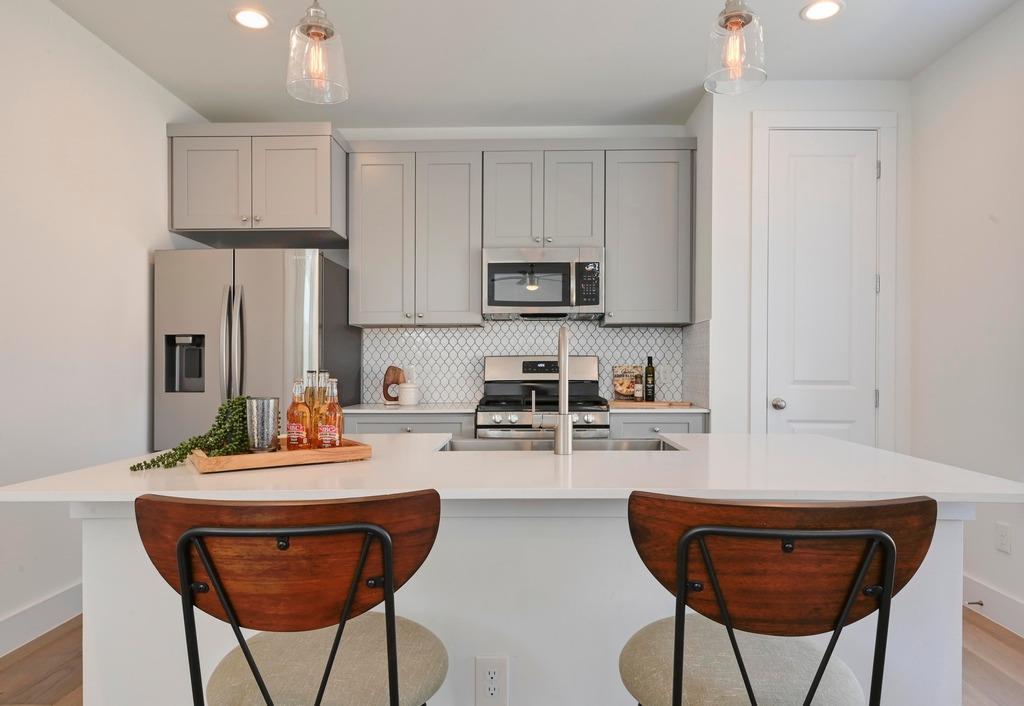
A buyer sees your home against the backdrop of every other home they toured that week at a similar price. If they walked through four houses before yours and three of them had updated counters, fresh paint, and modern lighting, those homes set the buyer’s baseline. Your home gets compared to that baseline, not to how it looked when you moved in or what it meant to your family.
The most useful thing you can do before setting your list price is go see what buyers see. Tour two or three open houses in your neighborhood and price range before you list. Walk in with a buyer’s mindset. Ask yourself honestly: if I had $550,000 to spend and I’d seen everything available this weekend, which home would I choose?
If the honest answer isn’t yours, you know exactly where to focus your preparation and your pricing before you go to market.
Your agent can also set you up on the same MLS alerts buyers are receiving so you see your competition in real time. When a similar home comes on at $525,000 while you’re listed at $550,000, you want to know about it the same day it hits, not three weeks later when you’re wondering why showings slowed down.
Related: 17 Pro Tips for Selling an Austin Home That Won’t Sell
The Bottom Line
Every mistake in this post has the same root cause. Sellers who price based on what they need to net, who reject offers because a number feels insulting, who refuse concessions on principle, who hired an agent because it felt rude not to â they’re making financial decisions with emotional logic. In a seller’s market, that sometimes works out because demand covers the mistake. In Austin’s 2026 market, it doesn’t. Buyers have too many choices and too much time.
The sellers who are closing right now share one habit: they get the data, they listen to it, and they make decisions based on what the market is telling them instead of what they wish it would say. They counter every offer. They price from sold comps, not from 2022 sales or Zillow estimates. They offer the concession that gets the deal done. They chose their agent based on track record, not because it was the path of least resistance.
None of this requires you to feel differently about your home. It just requires you to keep those feelings separate from the decisions. That’s a harder ask than it sounds, especially in the middle of a transaction that feels personal because it is personal. But it’s the ask the 2026 Austin market is making of every seller. The ones who answer it are the ones who close.
Frequently Asked Questions
The Austin metro average is approximately 89 days, based on April 2026 Unlock MLS data. That number varies by price point and neighborhood. Well-priced homes in high-demand areas can still move faster, while overpriced homes at any price point tend to sit well beyond the average. If your home is approaching 45 days on market without an offer, that’s a signal worth taking seriously and usually points back to price.
Yes, always. Counter every offer you receive, including ones that feel insulting. The worst case is the buyer doesn’t respond and you’re exactly where you started. The best case is you open a negotiation that leads to a closed sale. Walking away without a counter closes that door permanently. In Austin’s current market, an offer 5% to 8% below asking is a negotiation opening, not a lowball. Reserve your outrage for offers 15% or more below market value, and even then, a counter costs you nothing.
Yes. In Austin’s 2026 buyer’s market, seller concessions of $5,000 to $15,000 are standard on most transactions. Buyers are consistently asking for closing cost credits, rate buydowns, and repair credits. Refusing concessions on principle often costs sellers more in the long run through extended days on market, eventual price reductions, and lost buyers who had every reason to close.
It’s a starting point, not a comp. Zillow’s algorithm uses public data and has never been inside your home. In active markets where inventory and prices are shifting, Zestimates can be off by 5% to 10% or more in either direction. Use sold comps from the last 90 days, pulled from Unlock MLS by your listing agent, to set your price. Those are based on actual transactions, not an algorithm with no eyes on your property.
Start with three questions: What is your average list-to-sale price ratio? How many homes have you sold in my specific neighborhood and price range in the last 12 months? Can you show me the sold comps you used to arrive at your suggested list price? An agent who answers those questions clearly and with data is worth hiring. One who is vague, who inflates a number to win your listing, or who can’t explain their pricing rationale is not. Interview at least two or three agents before signing anything.
Ready to Sell Smart?
The sellers who do best in Austin’s 2026 market have one thing in common: they treat the sale like a business decision, not an emotional event. They price from the data, counter every offer, stay flexible on concessions, and go into the process with a clear picture of what they’re competing against.
If you’re thinking about selling and want an honest read on where your home stands in today’s market, start here. Tell us about your home and we’ll walk through what it’s actually worth, what comparable homes are doing, and what a realistic strategy looks like. Eleven Oaks Realty has been helping buyers and sellers since 1978, and we’ll give you the real picture, not an inflated number to win your business. Call or text us at (512) 827-8323 or email us at info@11OaksRealty.com to schedule a no obligation consultation.




Leave a Reply